Posts

Showing posts with the label Installations

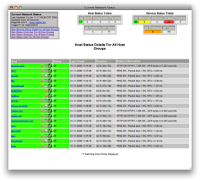
Setting-up Nagios in Ubuntu
Image
1. Overview Nagios is a powerful tool that provides you with instant awareness of your organization's mission-critical IT infrastructure. Nagios allows you to detect and repair problems and mitigate future issues before they affect end-users and customers. 2. Platform Ubuntu (Desktop) 8.04 Hardy Heron Username : nagios Password : "password" Nagios Version 3.0.3 Nagios Plugin 1.4.13 Nagios NRPE Plugins 2.12 (For clients / Hosts) NSClient++ Win32-0.3 (For Clients / Hosts) 3. Installation 3.1. Nagios Server 3.1.1. Required Packages Make sure you've installed the following packages on your Ubuntu installation before continuing. Apache 2 GCC compiler and development libraries GD development libraries You can use apt-get to install these packages by running the following commands: $ sudo apt-get install apache2 $ sudo apt-get install build-essential $ sudo apt-get install libgd2-xpm-dev 3.1.2. Account Information Become the root user. $ sudo -s Create a new nagi...

Implementing Subversion - CentOS

Note: Apache is a requirement in setting up the Subversion. 1. Installing subversion. $ yum install mod_dav_svn subversion 2. Configuring subversion's apache. $ nano /etc/httpd/conf.d/subversion.conf Make sure that these are loaded: # Make sure you uncomment the following if they are commented out LoadModule dav_svn_module modules/mod_dav_svn.so LoadModule authz_svn_module modules/mod_authz_svn.so # Add this directive <Location /repos> DAV svn SVNPath /var/www/svn/repos AuthType Basic AuthName "Subversion repos" AuthUserFile /etc/svn-auth-conf Require valid-user </Location> 3. Create an SVN user. $ htpasswd -cm /etc/svn-auth-conf svnuser 4. Configure the repository. $ cd /var/www/ (or the default apache web folder) $ mkdir svn $ cd svn $ svnadmin create repos $ chown -R apache.apache repos $ service httpd restart 5. Accessing the URL using a browser. http://serversIPorDomain/repos or http://192.168.0.xxx/repos ref : wiki centos

ProFTPD and VSFTPD Server Installation

Vsftpd installation and simple configuration - CentOS 5.2 1. Install the package via yum. $ yum install vsftpd.i386 2. The default configuration is located at /etc/vsftpd/vsftpd.conf, edit and apply configurations below. # Allow anonymous FTP? anonymous_enable=NO # Uncomment this to allow local users to log in. local_enable=YES # Uncomment this to enable any form of FTP write command. write_enable=YES # Add this line to jail users on their home directories. chroot_local_user=YES 3. Start VSFTPD $ /etc/init.d/vsftpd start Proftpd Vsftpd installation and simple configuration - CentOS 5.2 1. Login as root, download and install the package: $ wget http://software.virtualmin.com/gpl/centos/5.2/i386/proftpd-1.3.0a-3.el4.i386.rpm $ rpm -ivh proftpd-1.2.10-1.fc1.i386.rpm 2. The default configuration can be found at /etc/proftpd.conf, edit and apply configurations below. ServerType standalone DefaultServer on # Use this to excude users from the chroot DefaultRoot ~ !adm # Use pam to authenticat...